
Taking care of a vehicle involves more than changing the oil. The engine, fuel system, tires, brakes, filters, and fluids all need attention at different times.
A smart vehicle maintenance routine follows the schedule in the owner’s manual. It also includes watching for small changes in how the vehicle starts, sounds, accelerates, and uses fuel.
Fuel treatment can be one part of that routine. It may help support cleaner fuel injectors and more even combustion. However, it does not replace regular service or repair damaged parts.
Understanding what fuel treatment can and cannot do will help you use it correctly.
Start With the Owner’s Manual
Every vehicle has its own maintenance schedule. The manufacturer may recommend oil changes, filter replacement, spark-plug service, fluid checks, and inspections at certain mileage or time intervals.
Start with that schedule instead of following general advice that may not apply to your vehicle. Maintenance needs can vary based on engine design, vehicle age, fuel type, and driving conditions.
Vehicles used for towing, hauling, short trips, or frequent stop-and-go driving may require more attention. Extreme heat, cold weather, dust, and long periods of storage can also affect maintenance needs.
Keeping simple service records can help. Write down the date, mileage, and work performed. This makes it easier to know what has been completed and what may be coming next.
Fuel Treatment Does Not Replace Oil Changes
Engine oil lubricates moving parts and helps carry heat and contaminants away from the engine. Over time, the oil and filter become less effective.
A fuel treatment is added to the fuel tank. It does not clean old engine oil, restore a worn oil filter, or provide the same protection as fresh oil.
Follow the manufacturer’s oil-change schedule and use the correct oil grade. Fuel treatment should never be used as a reason to delay an oil change.
Filters Still Need to Be Replaced
The engine air filter helps prevent dirt from entering the engine. The fuel filter helps catch material before it reaches the fuel pump and injectors.
A clogged filter can limit airflow or fuel flow. This may lead to slower acceleration, hard starting, rough operation, or a loss of power.
Fuel treatment cannot open a badly clogged filter. If a filter has reached its replacement interval or has become restricted, it needs to be replaced.
Some fuel filters are easy to reach, while others are located inside the fuel tank. Diesel vehicles may also have a water separator. Check the owner’s manual for the proper service schedule.
Tune-Ups and Repairs Are Still Important
The meaning of a tune-up has changed over the years. Older vehicles required regular adjustments that modern vehicles handle electronically. Today, a tune-up may include checking spark plugs, ignition parts, filters, belts, hoses, fluids, and computer trouble codes.
If the check-engine light comes on, the vehicle should be checked. A fuel additive cannot fix a broken sensor, damaged injector, weak fuel pump, worn spark plug, or other failed part.
Fuel odors, visible leaks, heavy smoke, repeated stalling, and major power loss also require proper diagnosis. Do not try to cover up a serious problem by adding a cleaner to the tank.
Do Mechanics Recommend Fuel Additives?
Some mechanics recommend fuel additives, while others only suggest them for certain vehicles or problems. The answer depends on the product, the engine, and what the vehicle manufacturer allows.
Some engine manufacturers have approved specific additives after testing. Cummins, for example, has recommended certain tested diesel additives for concerns such as injector deposits, lubricity, and cold-weather performance.
Other manufacturers take a more limited approach.Ford states that it does not recommend aftermarket additives unless they meet specific Ford requirements and are being used to address a particular concern.
A responsible mechanic will not claim that every vehicle needs an additive. The mechanic should consider the vehicle’s condition, fuel type, symptoms, and maintenance history.
Before using any treatment, check the owner’s manual and make sure the product is intended for your type of fuel and engine.
What Happens if You Put Too Much Injector Cleaner in Your Gas Tank?
Fuel-system cleaners are designed to work at a certain concentration. Adding more than the label recommends does not guarantee better or faster cleaning.
Too much cleaner changes the balance between the additive and the fuel. Depending on the formula and amount used, this could affect how the engine runs or place unnecessary stress on fuel-system parts. It can also waste product and money.
If you add slightly more than the recommended amount, read the label and contact the product manufacturer for guidance. If a large amount was added, do not guess. Contact the manufacturer, vehicle dealer, or a qualified mechanic before driving.
Never combine several different fuel treatments unless the manufacturers state that they can be used together. Different products may contain different chemicals and serve different purposes.
The safest approach is simple: measure the treatment, know how many gallons you are treating, and follow the directions.
How Long Does It Take for a Fuel Additive to Work?
The answer depends on the product and what it is designed to do.
A fuel additive begins mixing with the fuel after it is added to the tank. It then moves through the fuel pump, lines, and injectors as the vehicle is driven.
Some drivers may notice a change during the first treated tank. Others may not notice a clear difference. A fuel-system cleaner may require most or all of a tank to pass through the system before its effect can be judged.
Chevron, for example, shows results from one full treated tank for one of its fuel-system cleaners. That does not mean every product or vehicle will produce the same result.
The amount of buildup matters. Light deposits may respond differently than heavy deposits. A clean engine may show little noticeable change because there was no major problem to correct.
If the vehicle continues to idle roughly, hesitate, misfire, or lose power after treatment, it may have a mechanical or electrical problem that needs professional service.
How Fuel Treatment Supports Engine Care
Fuel injectors must deliver the correct amount of fuel in a controlled spray. This helps the fuel mix with air and burn inside the engine.
Deposits may affect the injector’s spray pattern or restrict fuel flow. When deposits are part of the problem, a fuel-system cleaner may help support smoother fuel delivery and more even combustion.
Fuel treatment may be useful as preventive care or as added support between regular service visits. It is not a guaranteed solution for poor fuel economy or engine trouble.
Mileage depends on many factors, including tire pressure, driving speed, traffic, weather, vehicle load, engine condition, and maintenance history. No fuel treatment can overcome all of those conditions.
Make Fuel Factor X Part of the Routine
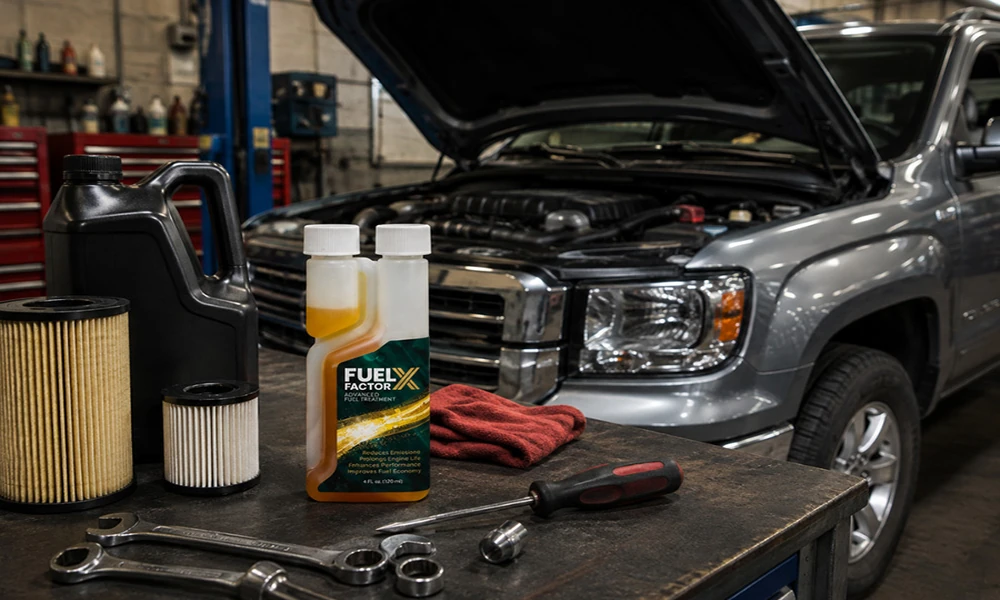
Fuel Factor X is a concentrated fuel treatment designed for gas and diesel engines. It supports cleaner fuel-system operation, consistent fuel delivery, and cleaner combustion.
It can be added during a fill-up as part of a regular vehicle maintenance routine. Always follow the Fuel Factor X dosage instructions for the amount of fuel being treated.
Fuel Factor X does not replace oil changes, new filters, tune-ups, manufacturer-recommended service, or needed repairs. Instead, it works alongside those important steps.
Use quality fuel, keep up with scheduled service, watch for changes in performance, and take care of problems early. Fuel Factor X can provide another layer of support for drivers who want to keep their fuel system cleaner and their engine operating smoothly.
Results can vary based on engine condition, maintenance history, fuel quality, driving habits, vehicle type, and product use.